Application Cases

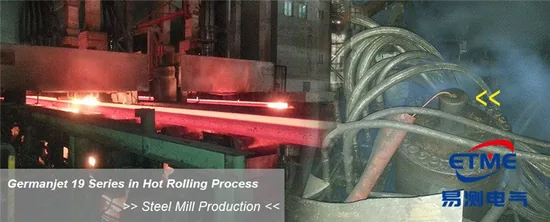
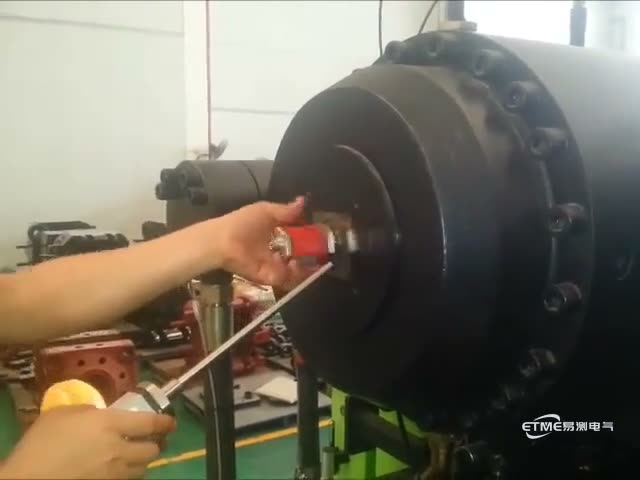
Germanjet installations in China across injection molding, hydraulics, wind power and steel.

Application Cases by Series

Multi-Industry Application Cases for Magnetostrictive Displacement Sensors

Multi-Industry Application Cases for Magnetostrictive Displacement Sensors

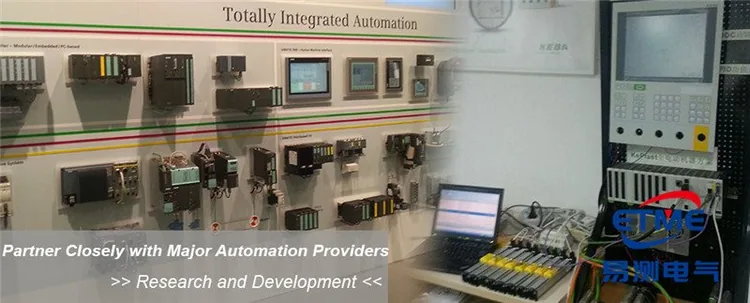
Germanjet magnetostrictive displacement sensors — non-contact measurement, μm-level repeatability, maintenance-free — are deployed across injection molding, construction machinery, metallurgy, wind power and automated production lines. This page gathers real-world applications of every series, showing stable operation under demanding conditions.
Series 12 General-Purpose Magnetostrictive Displacement Sensor Application Cases

Series 12 General-Purpose Magnetostrictive Displacement Sensor Application Cases

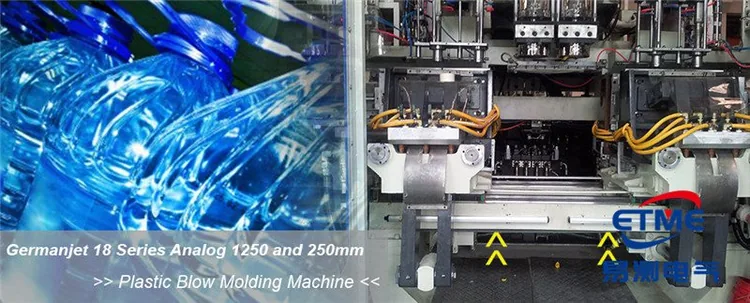
The Series 12 pairs a compact design with excellent value, offering analog voltage and Start-Stop outputs. It suits linear displacement detection in general machinery, automation equipment and measuring mechanisms — an ideal entry point into precision displacement measurement.

Series 16 Hydraulic Rod Magnetostrictive Displacement Sensor Application Cases

Series 16 Hydraulic Rod Magnetostrictive Displacement Sensor Application Cases

The Series 16 offers slim, compact and redundant configurations covering demanding duties such as marine propulsion, power plant valves, train tilting and metallurgical hydraulics. With 300~600 bar pressure resistance and multiple redundancy options, position feedback for critical systems is never lost.

Series 17 Hydraulic Cylinder Integrated Magnetostrictive Displacement Sensor Application Cases

Series 17 Hydraulic Cylinder Integrated Magnetostrictive Displacement Sensor Application Cases

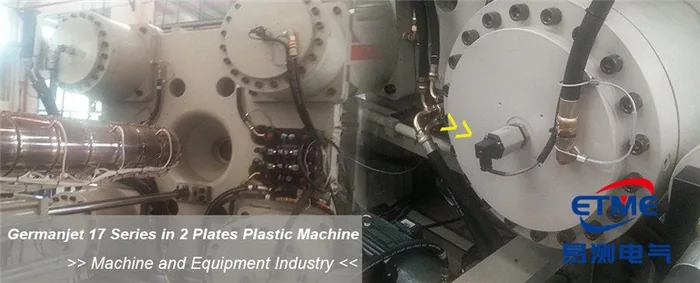
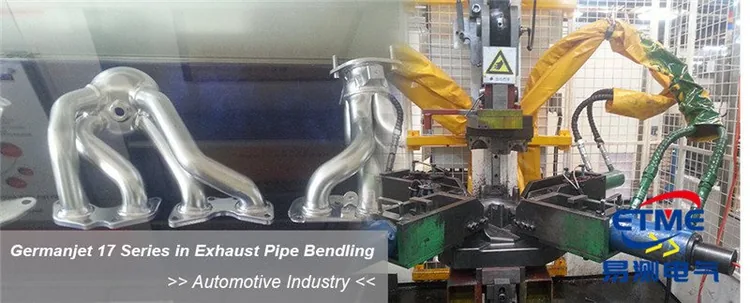
The Series 17 drops into conventional hydraulic cylinders with minimal effort. With IP65 protection and a standard DIN 43650 interface, it is widely used on injection molding machines, die casting machines and heavy hydraulic equipment, delivering μm-level closed-loop position control — the mainstream choice for the injection molding industry.

Series 18 Profile Magnetostrictive Displacement Sensor Application Cases

Series 18 Profile Magnetostrictive Displacement Sensor Application Cases

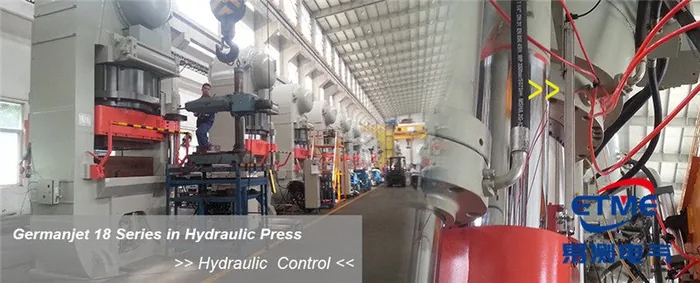
The Series 18 offers profile-mounted as well as external/built-in configurations, with analog voltage/current plus Start-Stop outputs. It suits precision displacement detection, automated production lines and machine integration, with flexible mounting and outstanding value.

Series 19D Split-Type Process Displacement Sensor Application Cases

Series 19D Split-Type Process Displacement Sensor Application Cases

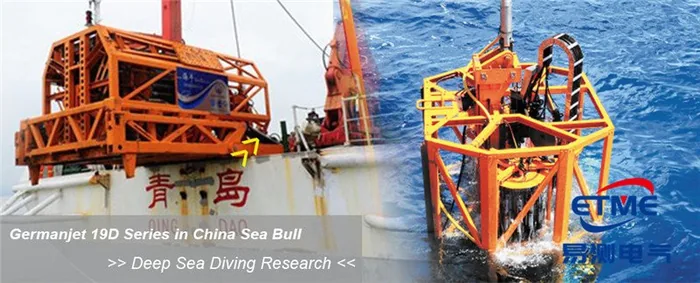
The 19D is a split-type process magnetostrictive displacement sensor: the transmitter is separated from the measuring rod, simplifying wiring in confined spaces and enabling remote installation. It supports CANBus / Profibus / Profinet / EtherCAT industrial fieldbus outputs.

Series 19F Flexible Process Displacement Sensor Application Cases

Series 19F Flexible Process Displacement Sensor Application Cases

The 19F is a flexible-cable process displacement sensor with a measuring range beyond 2,500 mm. It suits position detection on long-stroke, space-constrained guideways and large machines, with compliant routing and broad adaptability.

Series 19H Cylinder-Integrated Process Displacement Sensor Application Cases

Series 19H Cylinder-Integrated Process Displacement Sensor Application Cases

The 19H can be built into a hydraulic cylinder (300/600 bar pressure rating); the magnetostrictive rod installs directly inside the cylinder. It provides absolute position feedback for high-pressure hydraulic systems in metallurgy, petrochemicals and water conservancy, with a compact structure and dependable protection.

Series 19P External Rod Process Displacement Sensor Application Cases

Series 19P External Rod Process Displacement Sensor Application Cases

The 19P is an external rod process displacement sensor with a rugged structure and flexible installation. It suits external linear displacement measurement on gates, water conservancy hoists and heavy machinery, and supports industrial fieldbus output and remote integration.

Ejector Sensor Jitter on an Injection Moulding Machine: From Mounting Plate Resonance to the Standard Clip Fitting

Ejector Sensor Jitter on an Injection Moulding Machine: From Mounting Plate Resonance to the Standard Clip Fitting

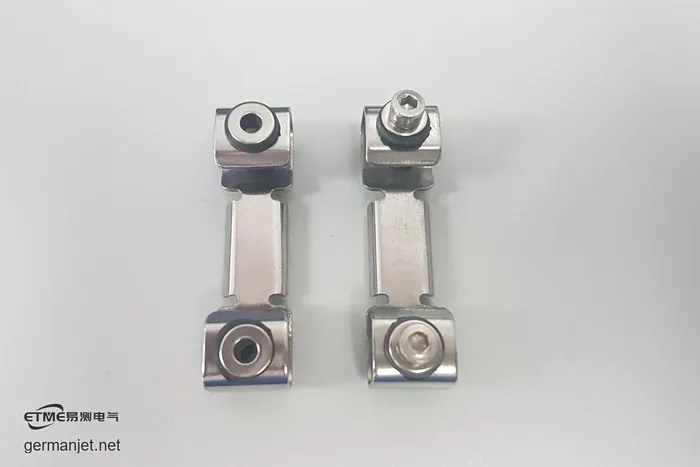
All ten injection moulding machines on the line were run up to maximum ejector speed and only one reading jittered; the other nine stayed steady. The cause was not the sensor: on that smaller machine the mounting plate was too thin and not rigid enough, so at speed the plate resonated like a tuning fork and fed high-frequency vibration down the cantilever into the sensor core. A replacement sensor would not have helped. Fitting an anti-vibration base cleaned the waveform at once and not one sensor was replaced. This page combines the site diagnosis with the standard anti-vibration mounting clip procedure: 42.5 mm hole pitch, 3.5 kgf·cm torque, no washer skipped, plus the installation over-travel found on several machines in the same batch.

Application Videos from the Field

A few highlights picked from our on-site footage, all shot on real machines — where the sensor is mounted, how the cabling runs and how the reading reaches the controller are all visible directly.

Magnetostrictive Principle — Transparent Cylinder Demo

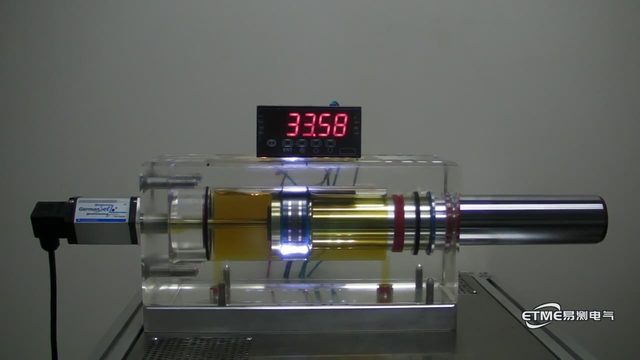
A principle demo built around a transparent acrylic cylinder. Inside, the yellow magnet moves along the probe while the digital display tracks it — six readings matching different magnet positions. When words fail to explain how magnetostriction works, this shows at a glance what is being measured and why nothing touches.

Large Two-Platen Machine — Gauge Mounted Along the Guide Rail

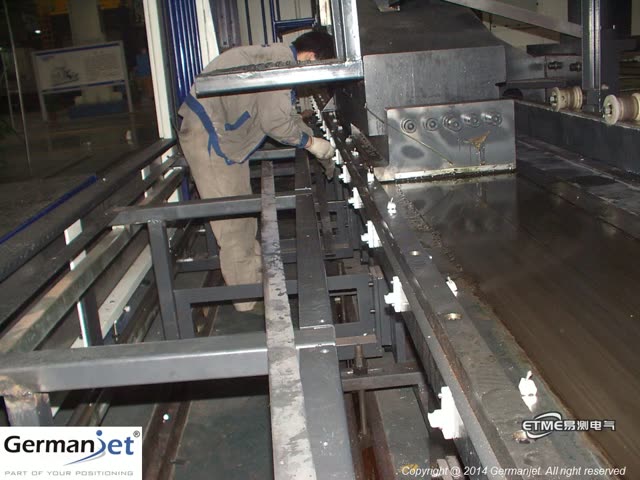
A continuous look at the clamp area of a large two-platen injection molding machine. The gauge runs along one side of the machine guide rail, with the body, slider and terminal wiring all in frame — showing how much space the sensor takes up, how it is fixed and how the cable is routed. Two-platen machines mean long strokes and heavy loads, so mounting parallelism and vibration resistance matter most.

Multiple Digital Gauges — Mounting and Seal Fitting

Mounting of digital gauges on a two-platen machine: how the gauge sits at the clamp cylinder flange, how the seal ring is fitted and tightened, with an on-screen note on seal selection. Whether the seal is done properly decides the long-term stability of a long-stroke measuring point in an oily environment.

Baidu
map