
High-PrecisionMagnetostrictive Displacement Sensors
German technology · Serving China's industry
Shenzhen Yice Electric Co., Ltd. is the authorised distributor of Germanjet magnetostrictive displacement sensors in China. The products serve injection molding, metallurgy, hydraulics, wind power, petrochemicals and other industries, delivering μm-level repeatability and long-term maintenance-free stability.
Product Range
From hydraulic cylinder integration and mobile hydraulics to process applications — complete displacement measurement solutions from analog outputs to industrial fieldbuses, built for demanding duties.
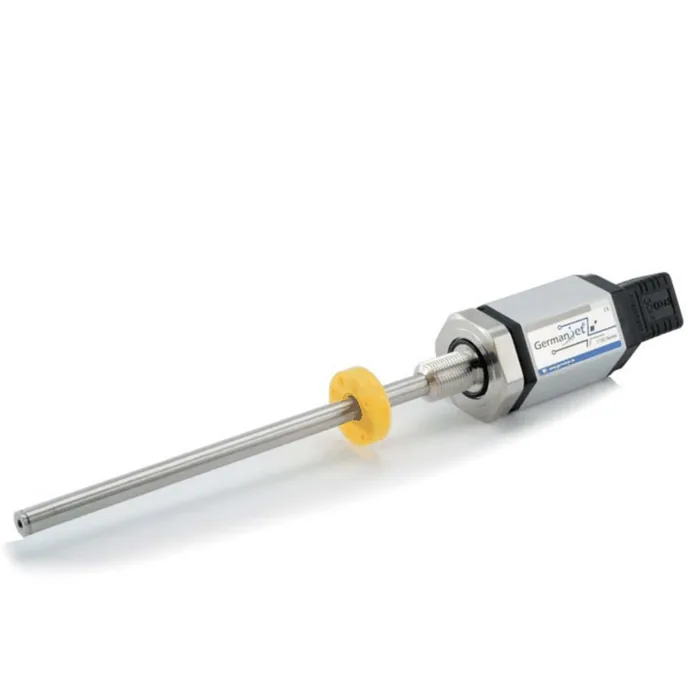
Series 17 Hydraulic Cylinder Integrated
Series 17 is Germanjet's flagship product line, engineered for integration into hydraulic…
View product details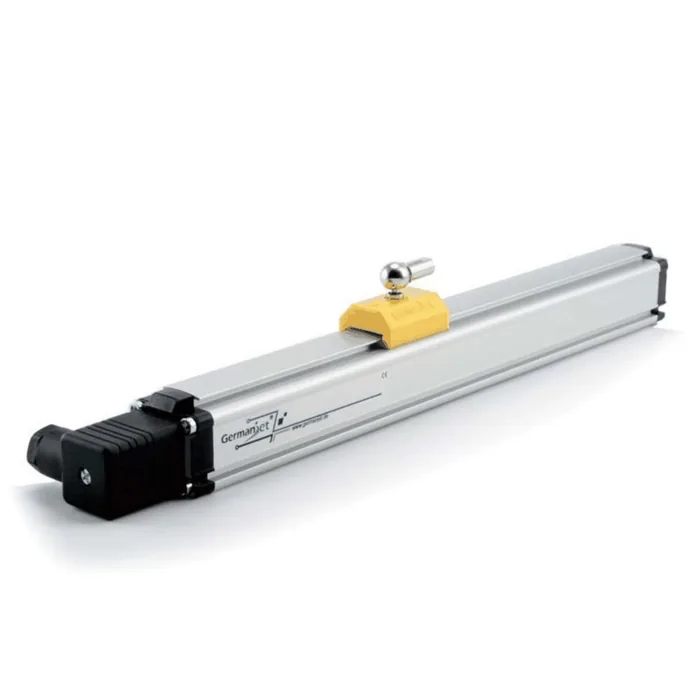
Series 18 External
The Series 18 external magnetostrictive displacement sensor uses non-contact…
View product details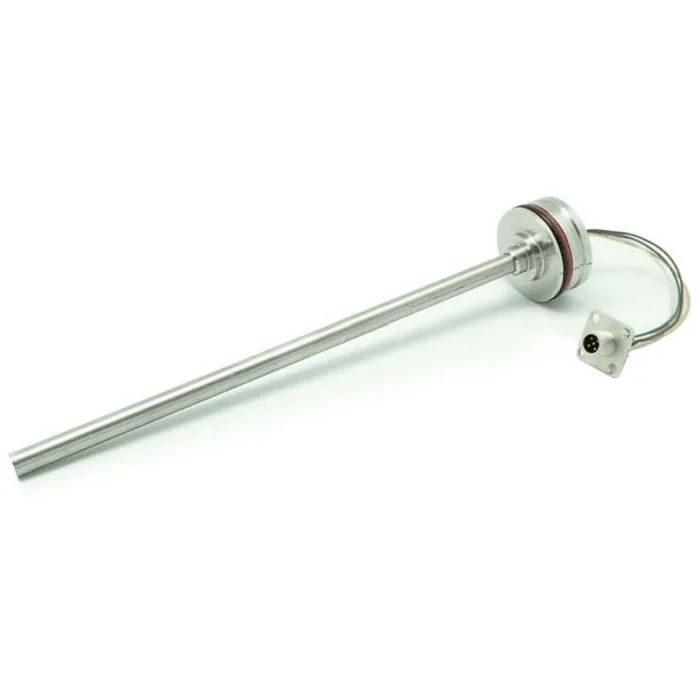
Series 13 Mobile Hydraulic
Series 13 is optimised for mobile machinery and mobile hydraulics. Its compact form…
View product details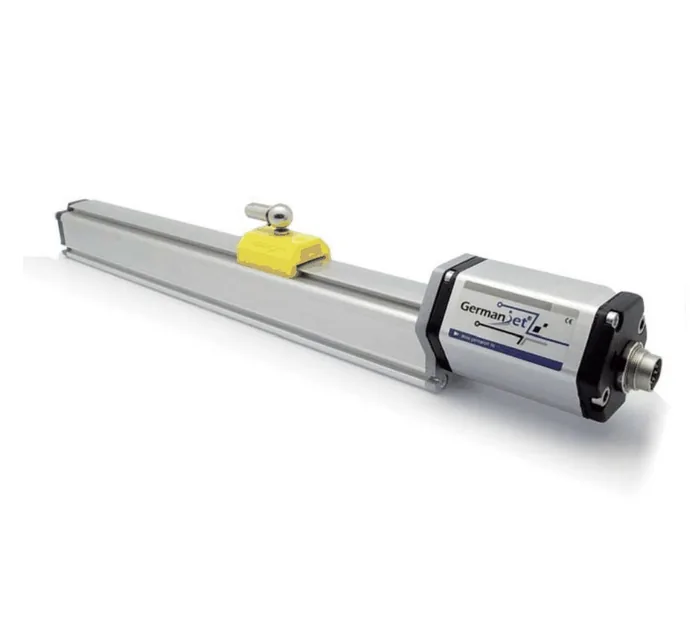
Series 19 P-Type External
The P-type external version is the most versatile form in Series 19, using an aluminium…
View product details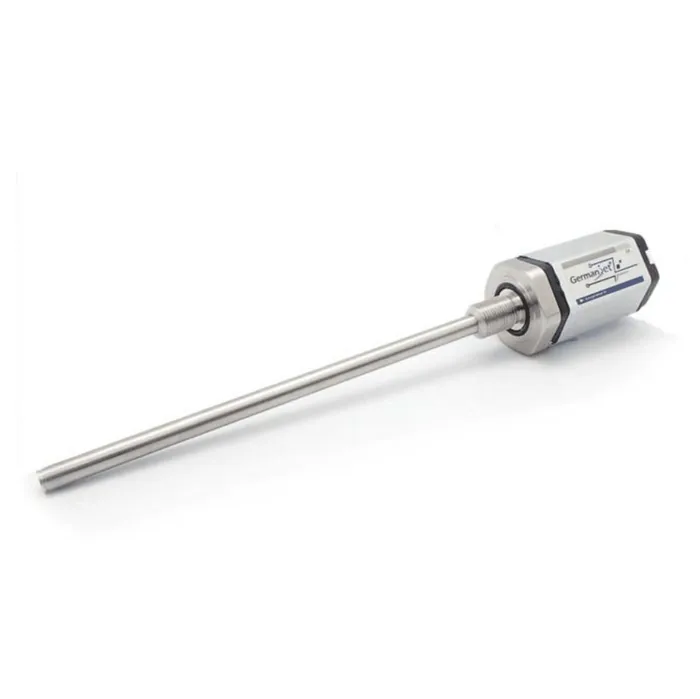
Series 19 H-Type Built-in Cylinder
The H type is designed for fully built-in installation in hydraulic cylinders. The…
View product details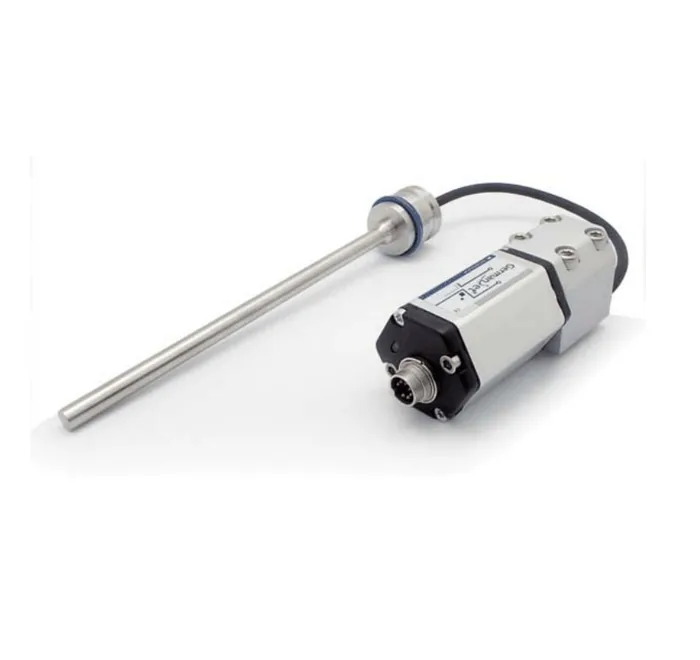
Series 19 D-Type Split
The D-type split design completely separates the sensor head (electronics housing) from…
View product detailsHow Magnetostriction Works
Non-contact measurement by design: the principle itself delivers no wear, long service life and exceptional stability. Two magnetic fields interact to launch a strain wave, and a microprocessor resolves it into an absolute position.
Two magnetic fields
The moving position magnet produces the first magnetic field and the pulse generator the second; both coexist along the waveguide.
Strain wave launched
At their point of intersection the two fields interact and launch a torsional strain wave that travels along the waveguide.
Wave detection
The wave analyser captures the returning echo; its propagation delay is strictly proportional to the magnet position.
Precise resolution
An embedded microprocessor analyses the waveform, converts it into absolute position and outputs a standard industrial signal.
Core Advantages
Non-contact measurement means minimal wear, long-term stability and very low maintenance cost.
Non-contact measurement
With the magnetostrictive waveguide principle there is no mechanical contact between the position magnet and the sensor body, eliminating frictional wear at its source. With no moving parts inside, service life under normal duty is extremely long, and the maintenance burden of mechanical drift and periodic replacement is greatly reduced.
Non-contact · Long service lifeμm-level accuracy
Repeatable resolution down to 1 μm with non-linearity of ±0.02% F.S., held stable over the full cylinder stroke. Temperature drift is kept within ±15 ppm/°C, so whether it is the precision closed loop of an injection cylinder or roll gap positioning on a mill, μm-level control requirements are met.
±0.02% F.S. · 1 μm resolutionHigh protection class
A fully sealed stainless steel housing, with standard models rated IP67 dust-tight and water-resistant; the dedicated mobile hydraulics series (Series 13) reaches IP68 and can operate permanently submerged; IP69K connectors are available for high-pressure washdown. Oil, dust, coolant, pressure washers — however harsh the site, it copes.
IP68 / IP69K · Stainless steel housingMultiple output signals
Analog outputs (4–20 mA / 0–10 V / Start-Stop) are plug-and-play with the vast majority of PLCs and controllers; digital interfaces cover SSI, PWM, CANopen, Profibus DP, Profinet, EtherCAT and other mainstream industrial fieldbuses. One sensor fits control systems from Siemens, Mitsubishi, Omron, Beckhoff and more.
CANopen · EtherCAT · ProfibusLow total cost of ownership
The non-contact principle means no periodic recalibration is required — calibrate once at installation and run for years. Compared with contact-type measurement, non-contact magnetostrictive technology significantly reduces long-term maintenance frequency and overall operating cost.
Maintenance-free · Low operating costGerman technology, local support
Built on more than thirty years of German magnetostrictive measurement expertise, the products are CE certified and RoHS compliant. As the authorised distributor of Germanjet in China, Yice Electric provides local selection advice, technical support, spare parts delivery and after-sales response, following the project from the design stage right through to on-site commissioning.
CE certified · Local supportApplication Cases
Typical application scenarios and selection references for each Germanjet series across injection moulding, metallurgy, wind power and mobile hydraulics.
 01
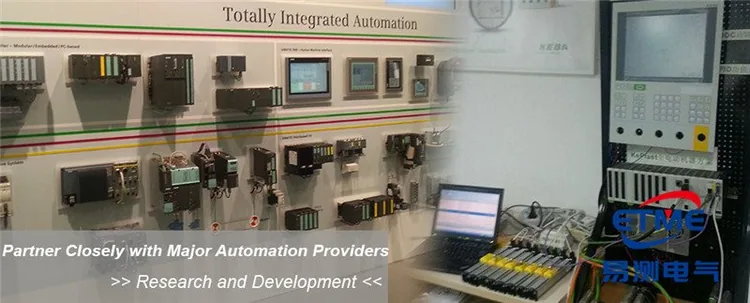
01Multi-Industry Application Cases for Magnetostrictive Displacement Sensors
Germanjet magnetostrictive displacement sensors — non-contact measurement, μm-level repeatability, maintenance-free —…
View details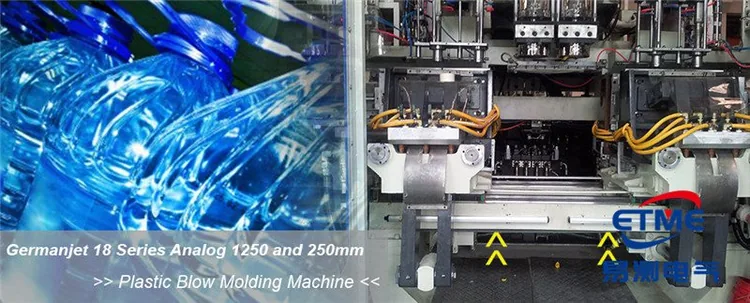 02
02Series 12 General-Purpose Magnetostrictive Displacement Sensor Application Cases
The Series 12 pairs a compact design with excellent value, offering analog voltage and Start-Stop outputs. It suits…
View details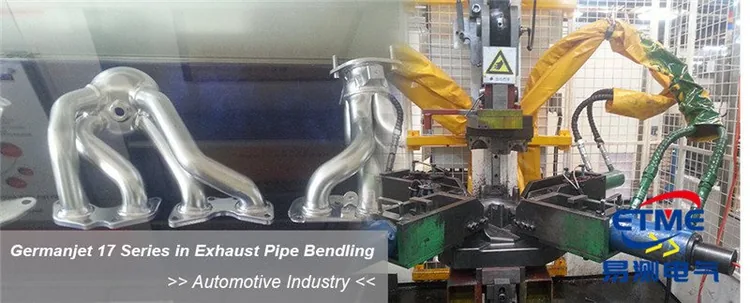 03
03Series 16 Hydraulic Rod Magnetostrictive Displacement Sensor Application Cases
The Series 16 offers slim, compact and redundant configurations covering demanding duties such as marine propulsion,…
View detailsHow Does the Sensor Actually Mount?
21 clips shot on site with no animation standing in — real installations on two-platen injection machines, presses, tank level systems and test benches. See where the gauge goes, how the cabling runs and how the reading comes out.
 0:31
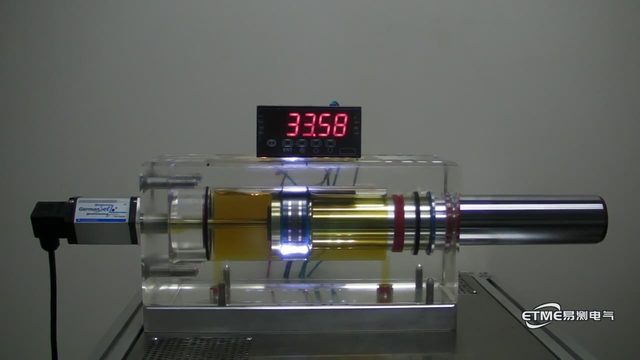
0:31Magnetostrictive Principle — Transparent Cylinder Demo
A principle demo built around a transparent acrylic cylinder. Inside, the yellow magnet moves along the probe while the digital…
 0:40
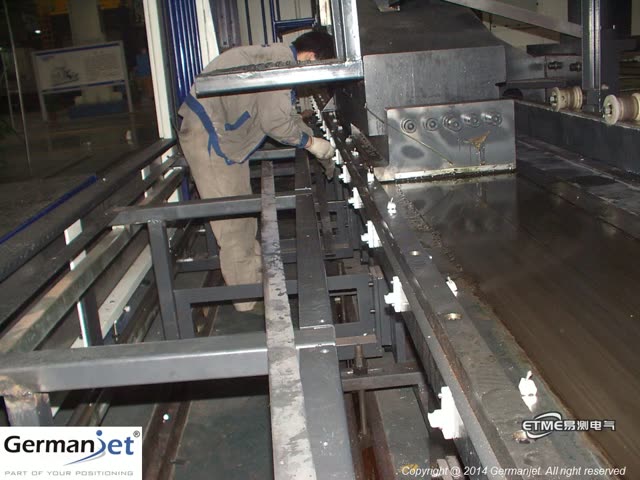
0:40Large Two-Platen Machine — Gauge Mounted Along the Guide Rail
A continuous look at the clamp area of a large two-platen injection molding machine. The gauge runs along one side of the…
 0:56
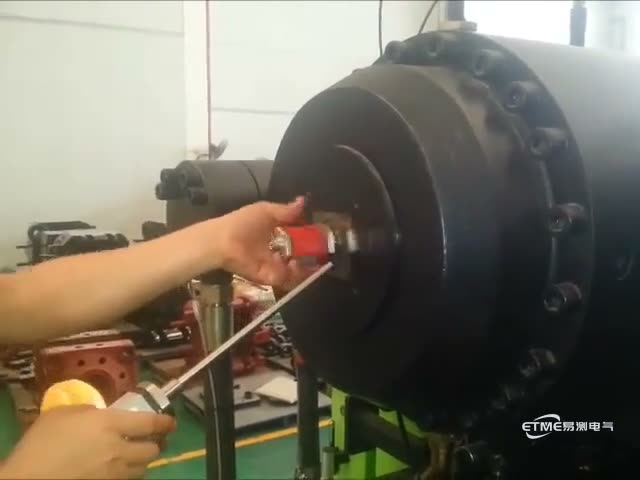
0:56Multiple Digital Gauges — Mounting and Seal Fitting
Mounting of digital gauges on a two-platen machine: how the gauge sits at the clamp cylinder flange, how the seal ring is…
Industries Served
Covering dozens of industrial sectors with reliable position measurement for critical duties.
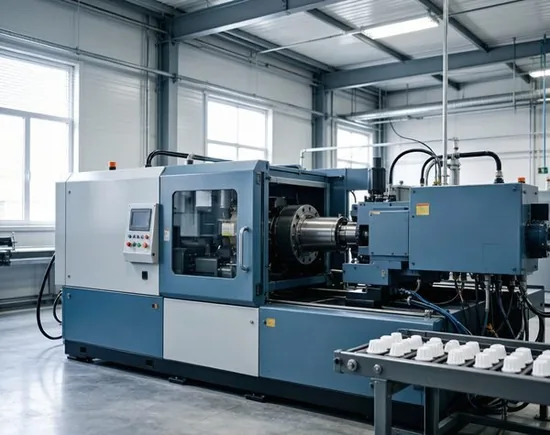
Injection Molding
Closed-loop position control of the injection cylinder for better part accuracy and consistency.

Metallurgy & Steel
Real-time monitoring of mill roll gap and continuous caster mold position.

Construction Machinery
Accurate feedback of boom travel and attitude on construction equipment.

Hydraulic Systems
Piston position detection in hydraulic cylinders for precise servo control.

Wind Power
Accurate position feedback for blade pitch systems.

Petrochemical
Continuous monitoring of process equipment position and travel, with corrosion-resistant materials available.
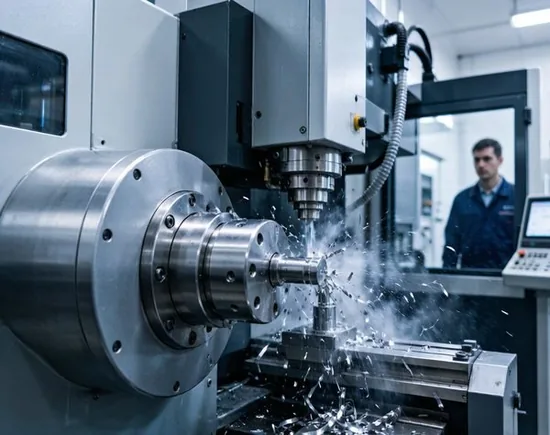
Machine Tools
High-accuracy positioning of spindles and tool feed.

Pharma & Power
Process sensors meeting clean and continuous operation requirements.
Industry Insights
Don't Touch the Magnetostrictive Displacement Sensor Yet: Four Layers to Check in Order
When sync drifts out, the two most convenient actions on site are changing control parameters and swapping the magnetostrictive displacement sensor. Both are usually wasted effort. The correct order is bottom-up through four layers: mechanical backlash and distortion, then hydraulic split, leakage, oil temperature and trapped air, then mounting and calibration of the position feedback, and only then control parameters. A ten-minute static versus dynamic split narrows the direction first.
Mechanical, Divider Valve or Servo Closed Loop: Choosing Between Three Ways to Sync Cylinders
Every multi-cylinder sync scheme reduces to one of three: enforce it with structure, split the flow, or close a loop on position. All three work, in different territory. Mechanical sync is easiest when spans are short and strokes are small, a divider valve is enough when the load is symmetric and the tolerance loose, and servo closed loop becomes unavoidable once the load is asymmetric or the tolerance reaches a few parts in a thousand. A three-step test decides which applies.
Why One Divider Valve Cannot Keep Two Cylinders Together: Four Errors Open Loop Never Corrects
Two cylinders push the same beam. The command is identical, the valves are identical, and the beam still runs crooked. The problem is not tuning. A divider valve synchronises by splitting flow, and with no position value anywhere in the circuit four errors stay uncorrected: the flow split itself, flow shifting under asymmetric load, oil compressibility, and internal leakage plus oil temperature drift. The position difference keeps accumulating along the stroke until something else stops it.
Frequently Asked Questions
Common questions on the principle, selection, accuracy, interfaces and installation of magnetostrictive displacement sensors.